
Automation is no longer a concept of the distant future—it’s happening now, and humanoid robots are at the forefront of this transformation. These machines are capable of performing complex tasks that once required human labor, increasing efficiency, cutting costs, and reshaping industries across the globe. According to Morgan Stanley, a single humanoid robot can handle the work of two human employees, demonstrating the immense potential of this technology.
Why Humanoid Robots Are Becoming Essential
Humanoid robots are not just machines; they are highly adaptable systems designed to operate in environments built for humans. They can handle repetitive, physically demanding, or precise tasks safely and efficiently. This makes them ideal for industries like manufacturing, logistics, healthcare, and retail.
By taking on labor-intensive work, robots reduce operational costs, minimize errors, and enhance safety. For example, in warehouses, robots can sort and transport goods faster and more reliably than human workers. In hospitals, they can assist with patient monitoring or help with surgical procedures, allowing medical staff to focus on tasks that require human judgment.
The Concept of Robonomics
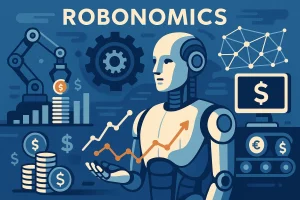
Morgan Stanley introduces the idea of “Robonomics,” a framework that examines the economic impact of humanoid robots. Just as electricity, the wheel, and the internet transformed productivity and labor, robots have the potential to reshape the modern workforce.
Robonomics highlights how robots don’t simply replace human labor—they augment it. In logistics, humanoid robots increase efficiency by handling repetitive tasks, while humans focus on strategic or creative work. In healthcare, robots can assist with routine or hazardous tasks, freeing human employees to concentrate on higher-value responsibilities.
Automation Beyond the Factory
Humanoid robots are part of a larger wave of automation that includes autonomous vehicles and AI-driven systems. Autonomous cars, for instance, could significantly reduce the cost of ride-sharing, while electric vertical take-off and landing (eVTOL) aircraft could generate revenue equivalent to multiple ride-share vehicles.
These technologies demonstrate that automation extends far beyond factories and warehouses. They are set to transform transportation, logistics, and urban mobility, providing faster, safer, and more cost-effective solutions. Businesses that adopt these innovations can gain a competitive advantage while offering improved services to consumers.
Tesla and the Future of Robotics
Tesla is a notable player in humanoid robotics through its Optimus project. Recently, Tesla secured advanced AI chips from Samsung Electronics to power both its autonomous vehicles and humanoid robots. These chips enhance the machines’ capabilities, enabling them to perform complex tasks with greater precision.
While Tesla’s main focus may be technology development, its progress illustrates the growing viability of humanoid robots in real-world applications. These machines are no longer confined to labs—they are becoming practical tools for modern industry.
Preparing for a Robot-Human Workforce
As humanoid robots become more prevalent, human workers will need to adapt. Repetitive or physically demanding tasks will increasingly be automated, pushing humans toward roles requiring creativity, problem-solving, and emotional intelligence.
Reskilling and training programs will be critical to ensure employees can thrive alongside robots. Companies that invest in workforce development will not only ease the transition but also maximize the productivity benefits of automation.
Benefits Beyond Cost Savings
Humanoid robots offer advantages beyond financial savings. They improve workplace safety by handling hazardous tasks, maintain consistent quality, and reduce errors. This is particularly valuable in industries such as manufacturing and healthcare, where precision and reliability are essential.
Moreover, robots enable humans to focus on tasks that require judgment, leadership, and empathy. A collaborative human-robot environment can foster innovation, efficiency, and higher overall productivity.
Challenges of Integrating Robots
Despite their potential, deploying humanoid robots comes with challenges. Initial investments, maintenance costs, and ethical considerations—such as job displacement—must be carefully managed.
Public perception is also important. While many see robots as tools to enhance productivity, others worry about job loss or reduced human interaction. Clear communication and responsible implementation are essential to ensure smooth adoption.
Looking Ahead: The Robot-Enhanced Economy
Humanoid robots are no longer a futuristic idea—they are becoming integral to workplaces worldwide. From factories and warehouses to hospitals and logistics centers, these machines are improving efficiency, reducing costs, and transforming how work gets done.
Companies that embrace humanoid robots while investing in employee development will be best positioned to thrive in this new era. As machines handle more routine or complex tasks, humans can focus on innovation, strategy, and decision-making. Together, humans and robots can create a more productive, safe, and efficient workplace.
Morgan Stanley predicts that humanoid robots could have an economic impact comparable to electricity or the internet, signaling a new era in industrial productivity. The future is collaborative, and those who prepare today will lead tomorrow.
About The Author